 +91-9310172512
 +44-7831491778
 +971-526686526
Curating certified treasures
India UK UAE
+91-9310172512+44-7831491778+971-526686526 India UK UAE+91-9310172512+44-7831491778+971-526686526 India UK UAE
Curating certified treasures
Tanzanite is a rare blue-violet zoisite from Tanzania, increasingly chosen as a modern Shani upratna when fine Blue Sapphire is unavailable.
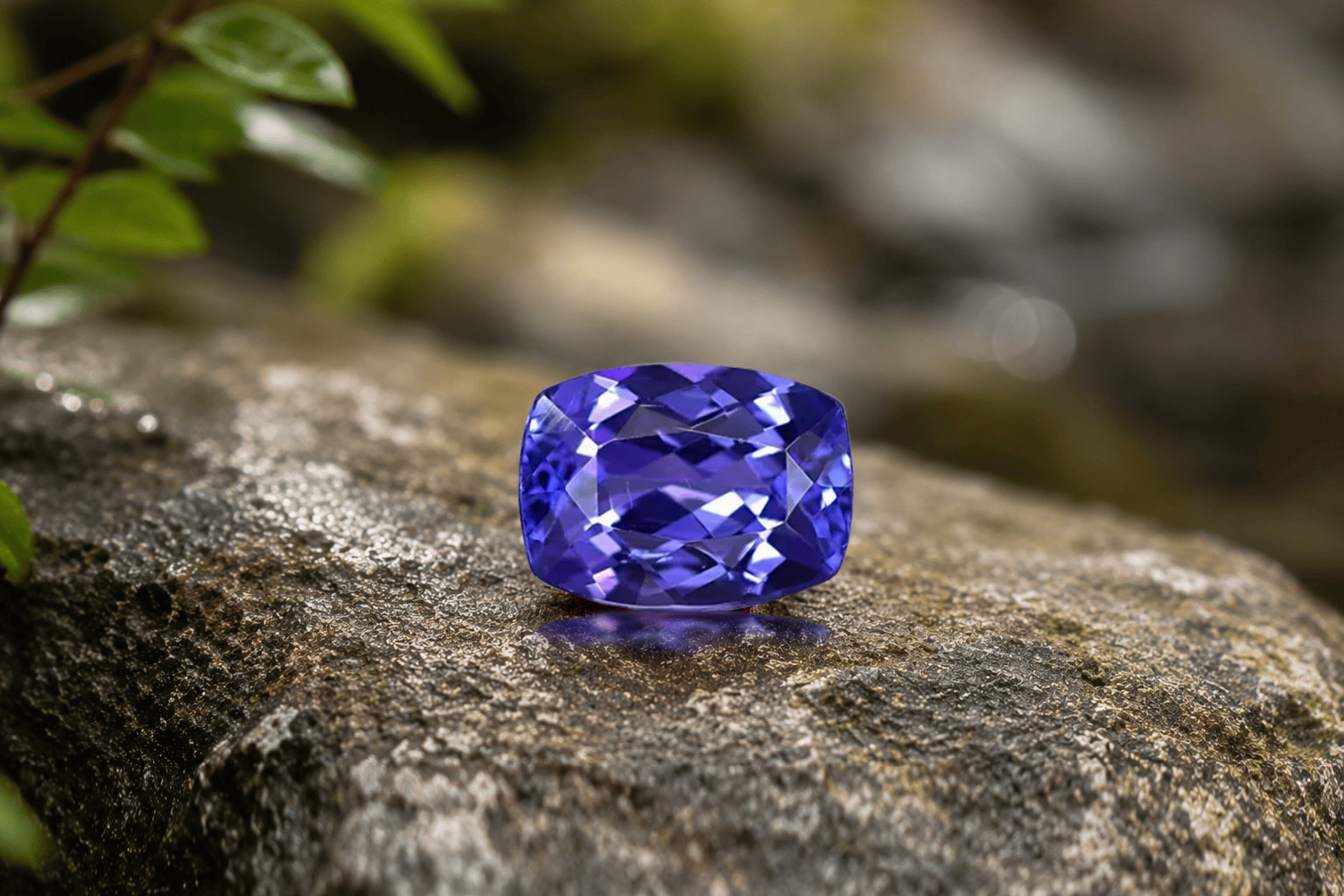
Tanzanite is blue zoisite — Ca₂Al₃(SiO₄)₃(OH) — coloured by vanadium with Mohs hardness 6–7. Trichroism shows blue, violet, and burgundy axes.
Discovered in 1967 near Merelani, Tanzania, it is a single-source gem in commercial quantities. Jyotish retailers often map its blue-violet to Shani as a contemporary Neelam upratna. Gemstone remedies are chart-specific. Always consult a qualified Jyotish astrologer before wearing any stone for planetary purposes.
Virtually all tanzanite is heat-treated from brown zoisite to blue — disclosure is mandatory.
| Mineral family | Zoisite (epidote group) |
| Typical colour | Blue to violet-blue |
| Mohs hardness | 6–7 |
| Vedic association | Saturn (Shani) — modern upratna |
Wear on Saturday during Shani Hora on middle finger in silver or Panchdhatu. Chant Shani mantra after purification.
Select eye-clean stones with strong blue face-up colour. Protective settings essential due to moderate hardness.
Heat treatment is universal — confirm your astrologer accepts heat-treated upratnas.
Considered when Saturn needs a blue-violet remedy and traditional Amethyst or Iolite are not preferred aesthetically.
May suit professionals seeking disciplined focus during Shani periods — only if chart supports Shani gemstones.
Gemstone remedies are chart-specific. Always consult a qualified Jyotish astrologer before wearing any stone for planetary purposes.
Associated with structured thinking, patience, and spiritual depth under Shani's contemplative influence.
Vivid colour and rarity create strong jewellery impact at lower cost than Kashmir Neelam.
Trichroic nature fascinates collectors and gem enthusiasts.
AAA tanzanite shows deep saturated blue. Lighter stones are more affordable. Carat sizes above 5 ct are relatively rare.
No synthetic commercial competition yet, but simulants include blue glass and treated iolite.
Rough is heat-treated — natural blue rough is essentially unavailable.
Colour saturation and size escalate price rapidly. Eye-clean 3+ ct gems are strong mid-range purchases.
Single-source supply means prices fluctuate with Tanzanian mining policy.
| Colour | Deep violetish blue face-up |
| Clarity | Eye-clean preferred |
| Cut | Orientation maximizes blue face-up |
| Treatment | Heat standard — disclose |
Tanzanite suits protected white-metal rings and pendants. Avoid tension settings and daily hard wear.
Earrings are ideal for showcasing colour with less risk.
Avoid ultrasonic and sudden temperature changes. Clean gently with soap and water.
Tanzanite cleaves — protect from sharp impacts.
Blue glass and cobalt-coated stones imitate tanzanite. Forgia and coated topaz are common scams.
Assume heat treatment — "unheated tanzanite" claims are almost always false.
It is a modern commercial upratna mapping, not ancient Sanskrit classical text. Many contemporary Jyotish practitioners accept it for Shani when Neelam is unsuitable — confirm with your astrologer.
Yes, essentially all market tanzanite is heated from brown zoisite. Disclose and seek astrological acceptance.
Both are blue-violet upratnas. Iolite has older folk usage (Neeli); tanzanite is newer. Classical preference varies — astrologer decides.
Possible in protected rings, but hardness 6–7 and cleavage make earrings and occasional-wear rings safer.
Tanzanian deposits are finite — long-term supply concerns exist, but current market availability is adequate for buyers.
Middle finger on Saturday in silver is standard Shani protocol for blue upratnas unless your chart specifies otherwise.
Adjust your filters, clear the search term, or request help sourcing a similar gemstone.