 +91-9310172512
 +44-7831491778
 +971-526686526
Curating certified treasures
India UK UAE
+91-9310172512+44-7831491778+971-526686526 India UK UAE+91-9310172512+44-7831491778+971-526686526 India UK UAE
Curating certified treasures
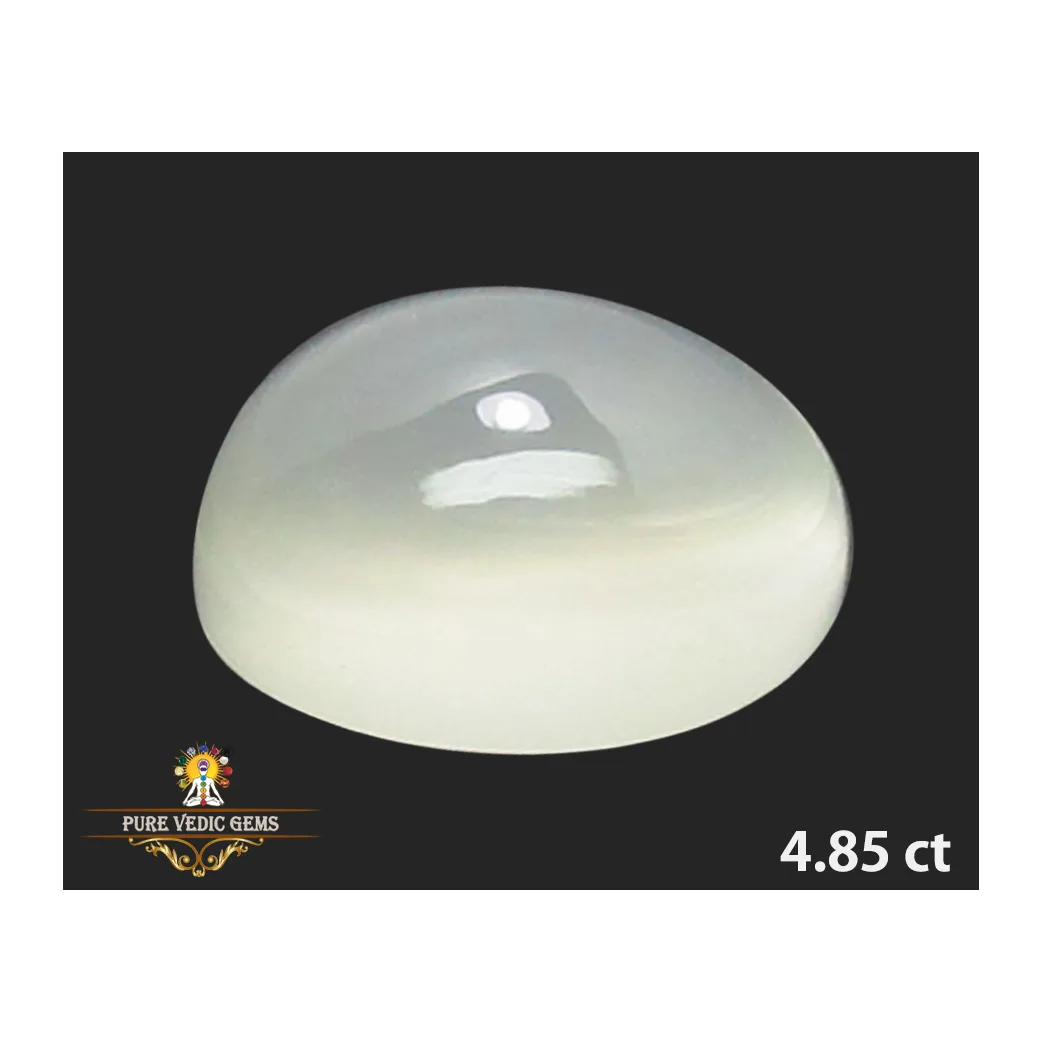
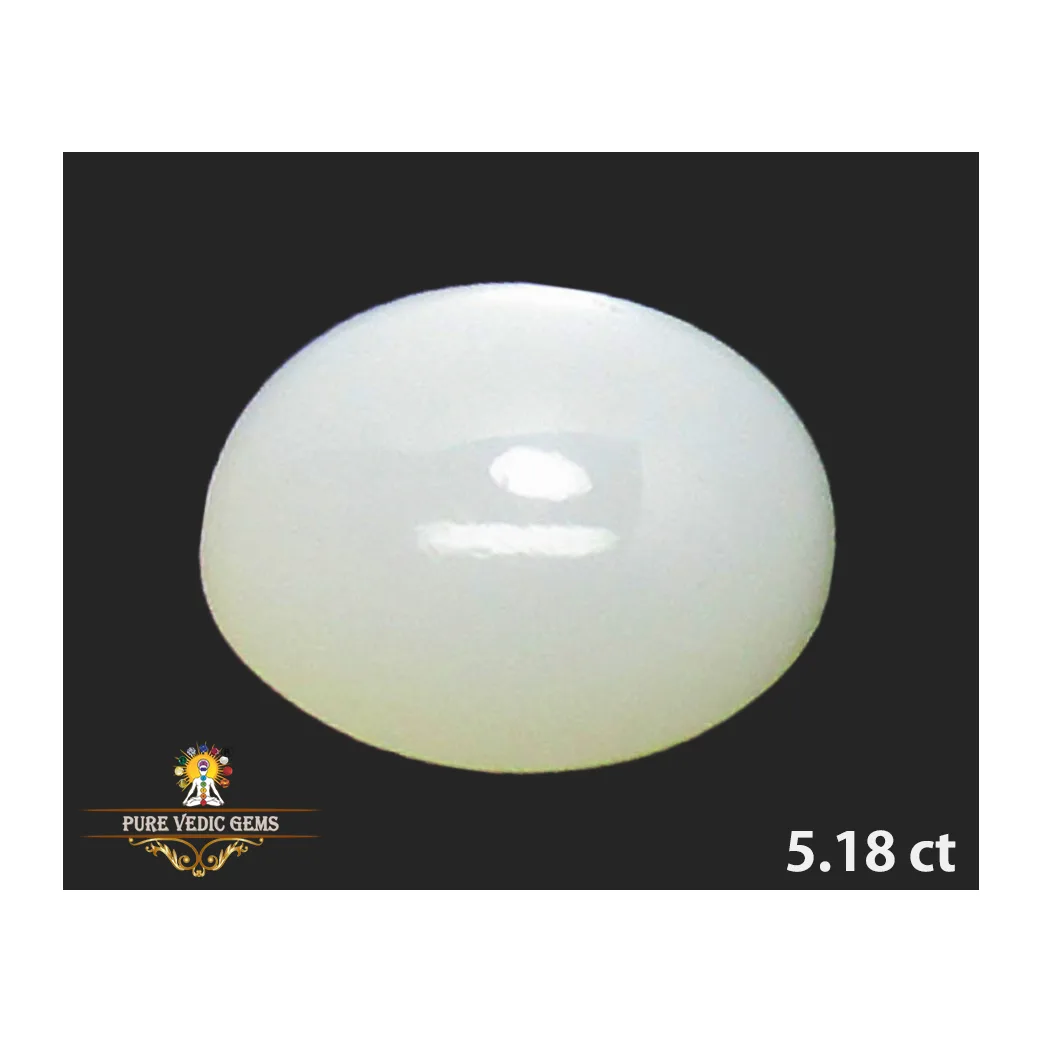
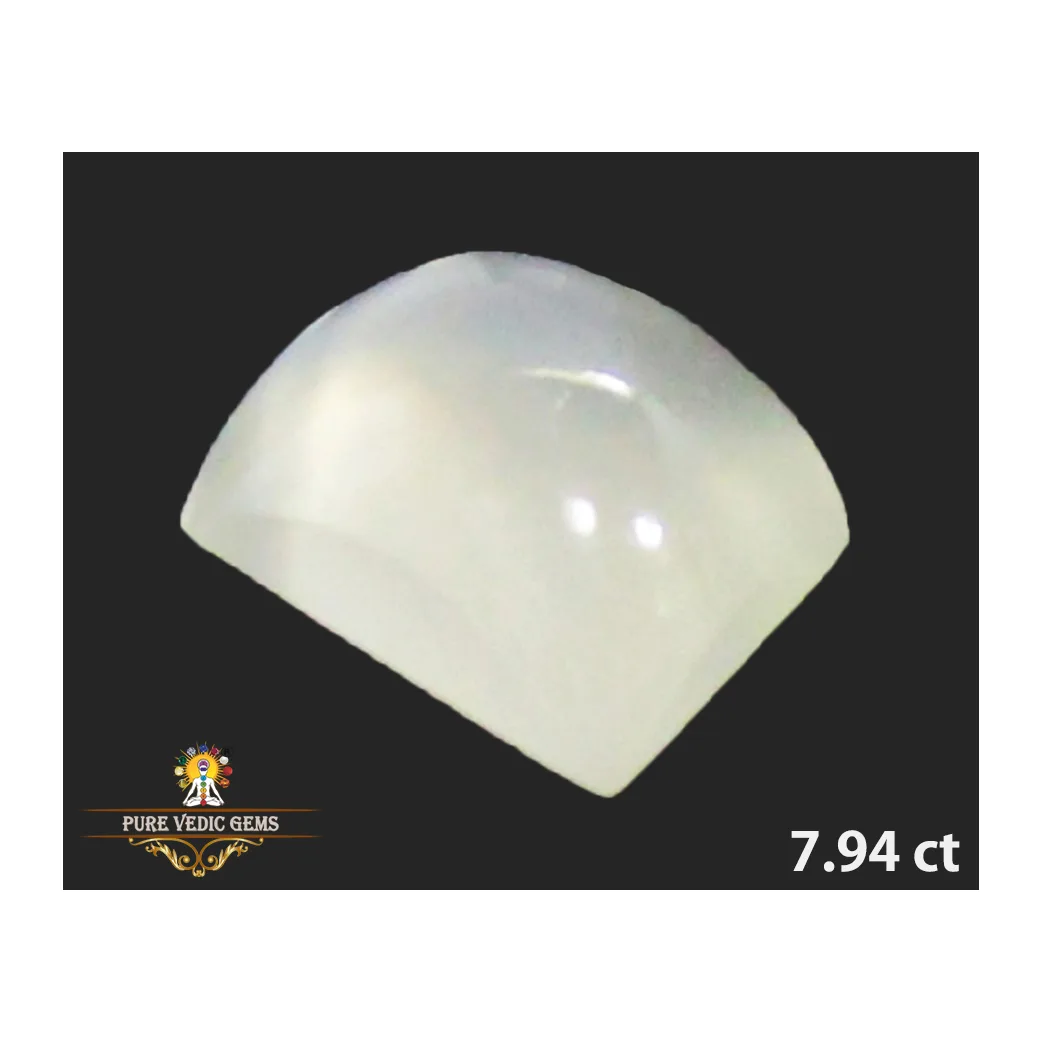
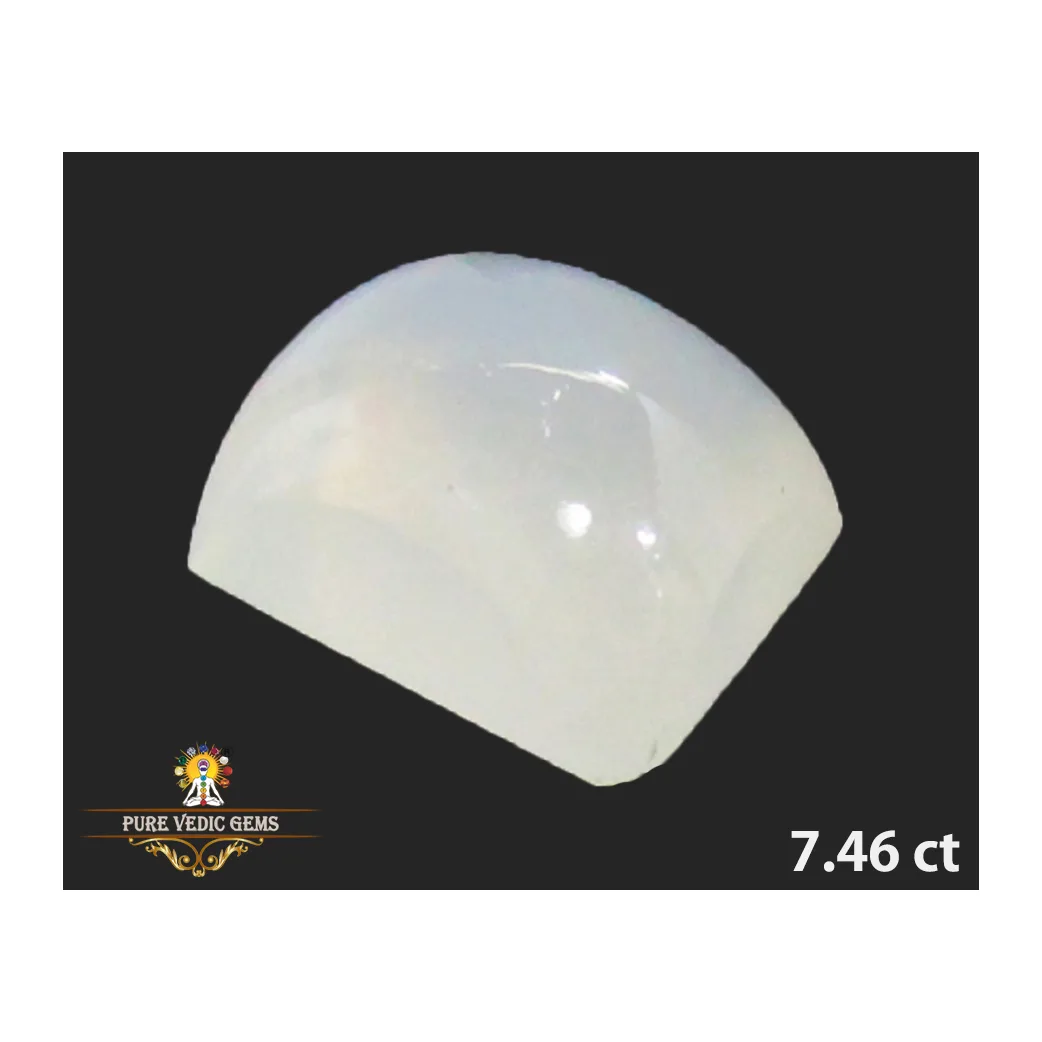
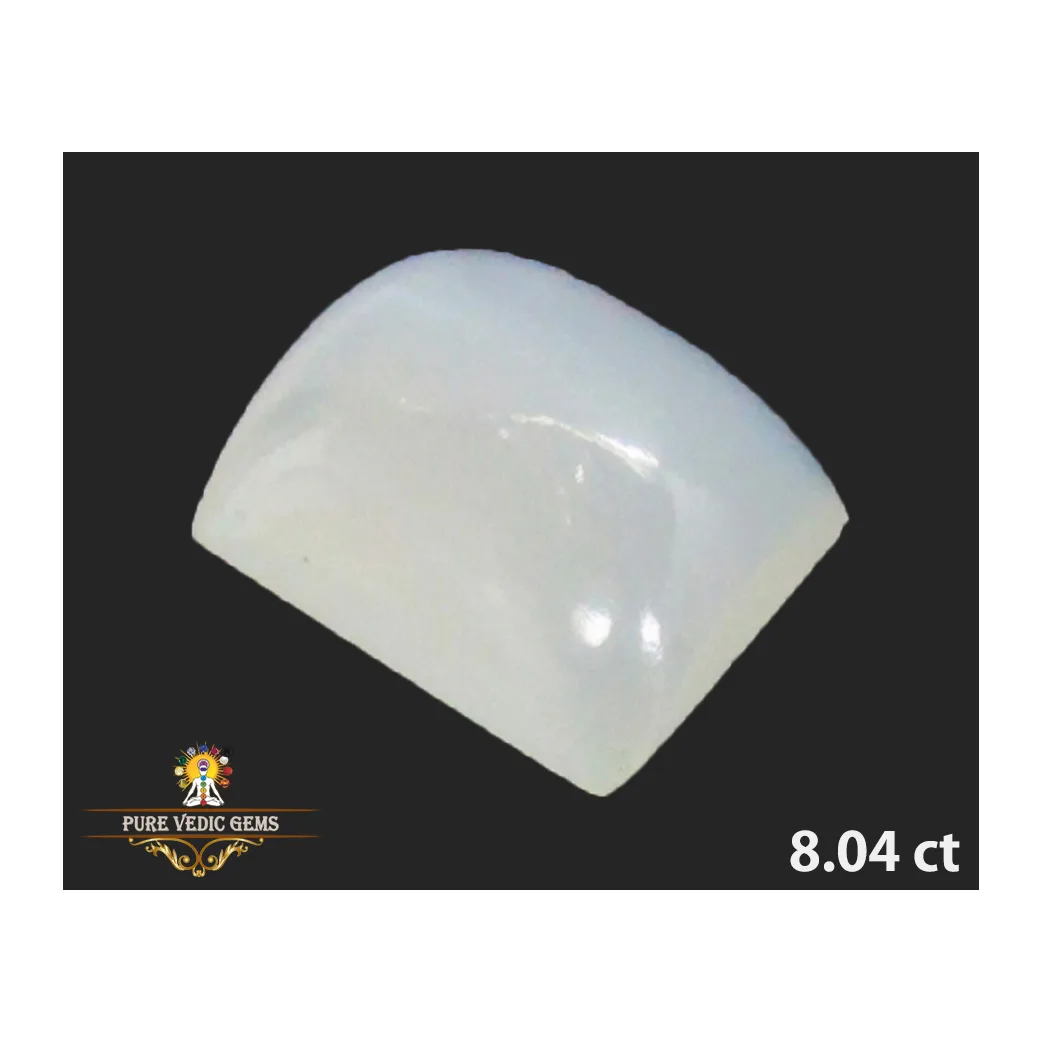
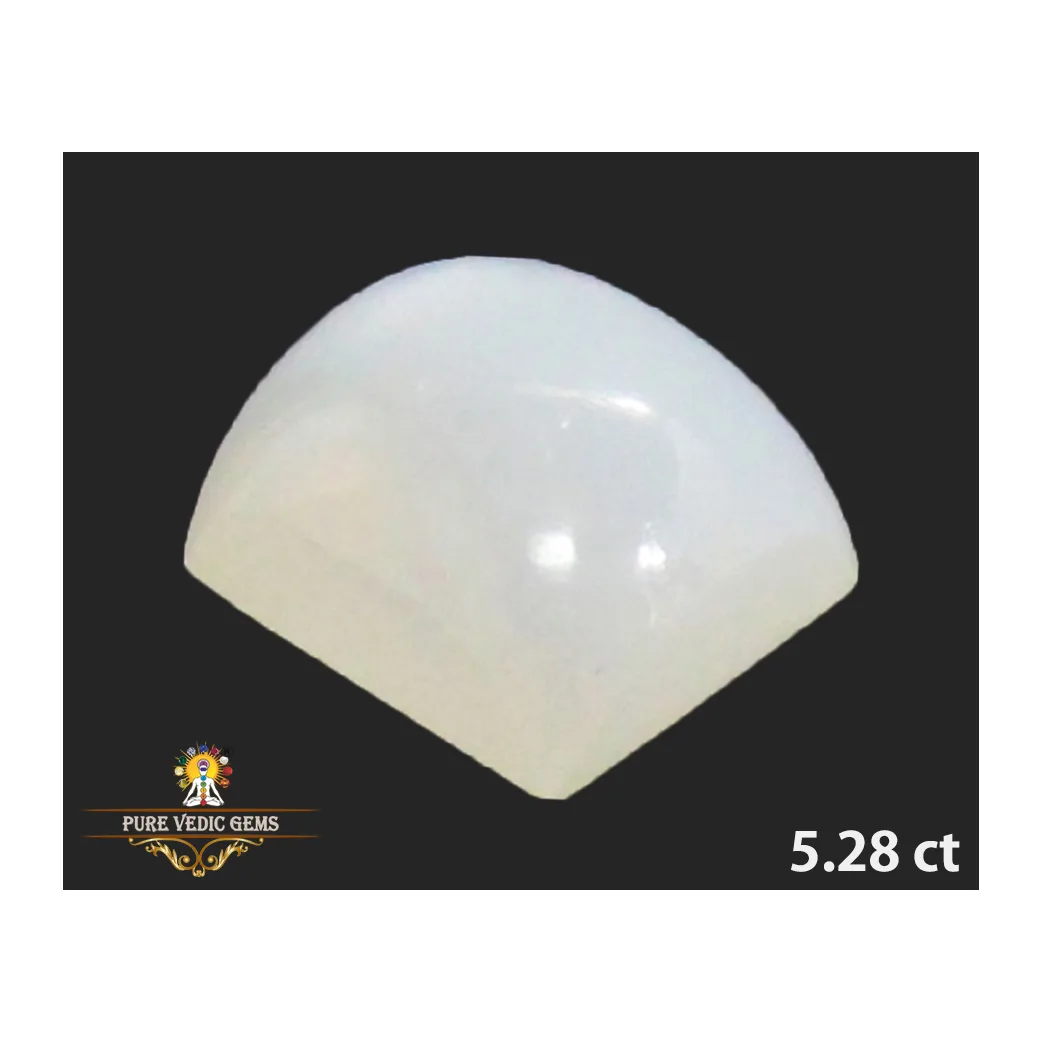
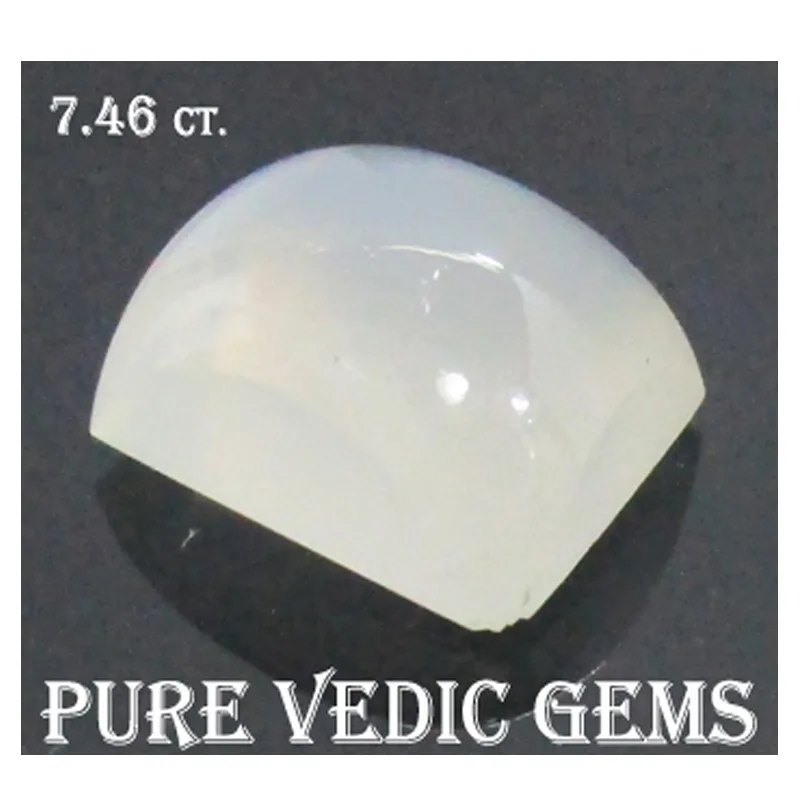
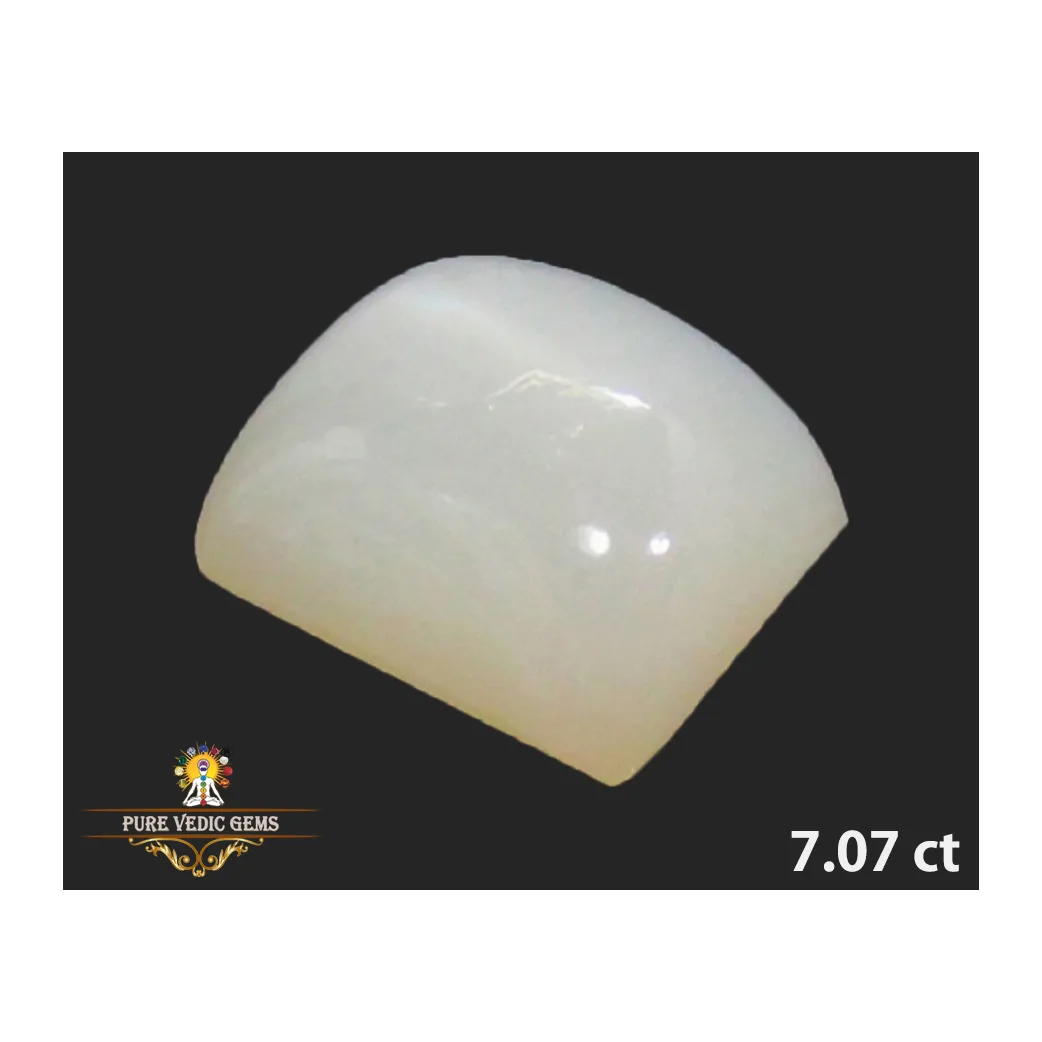
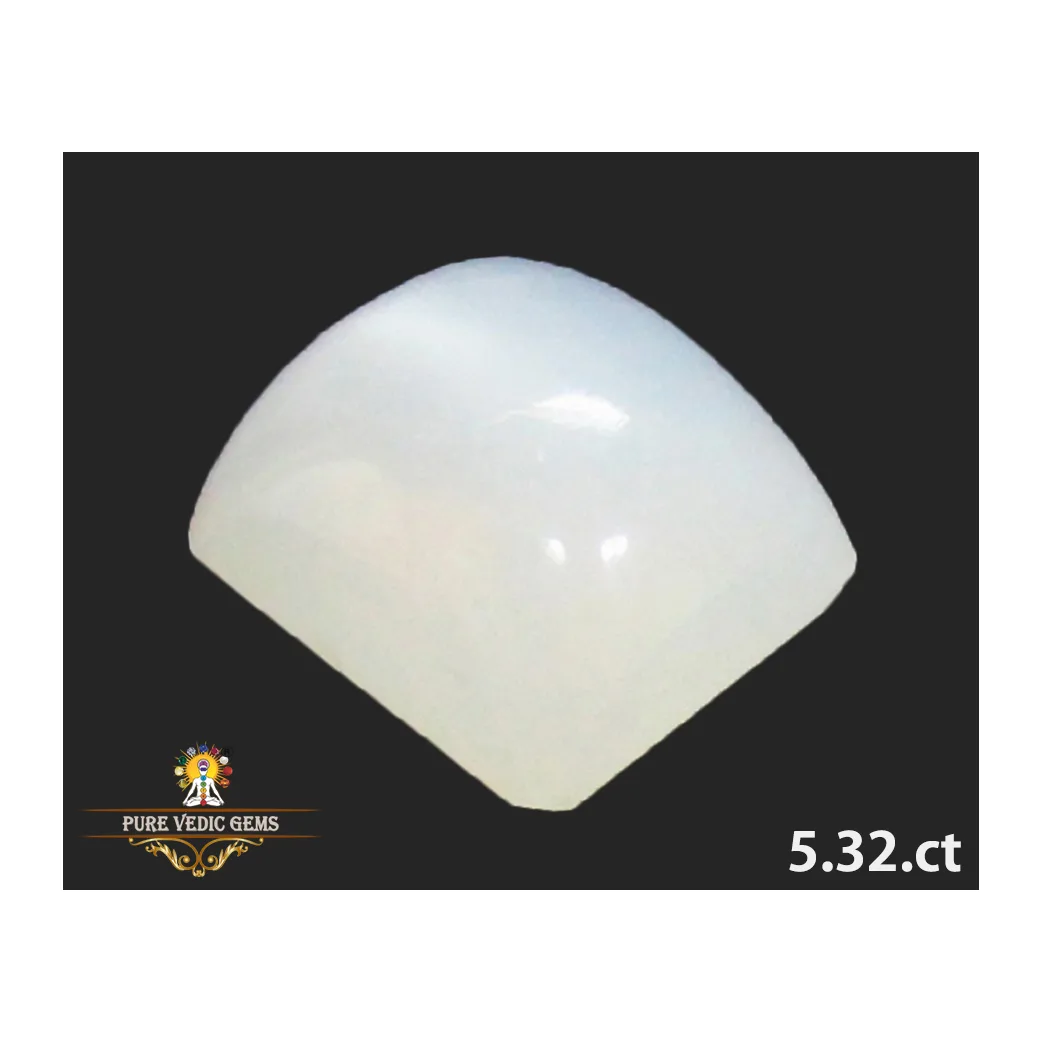
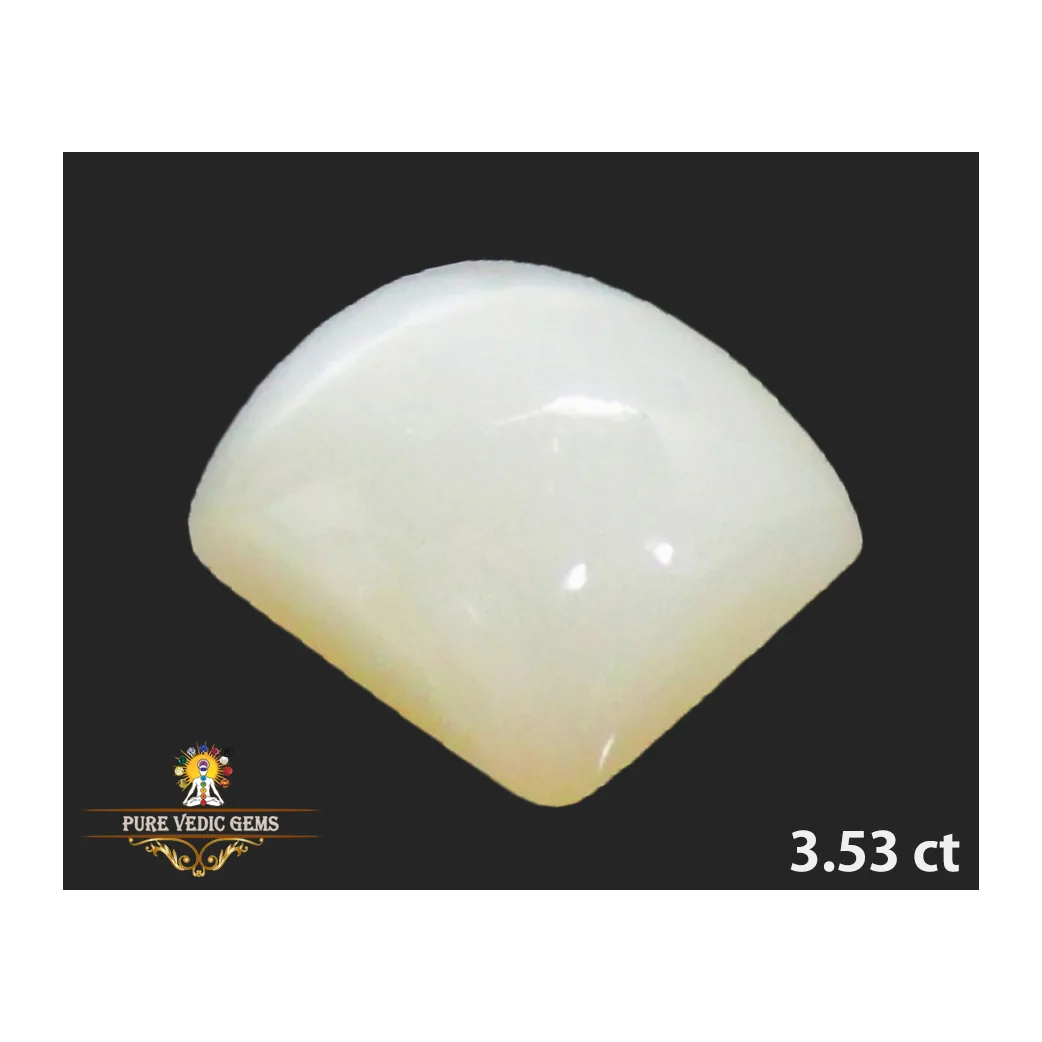
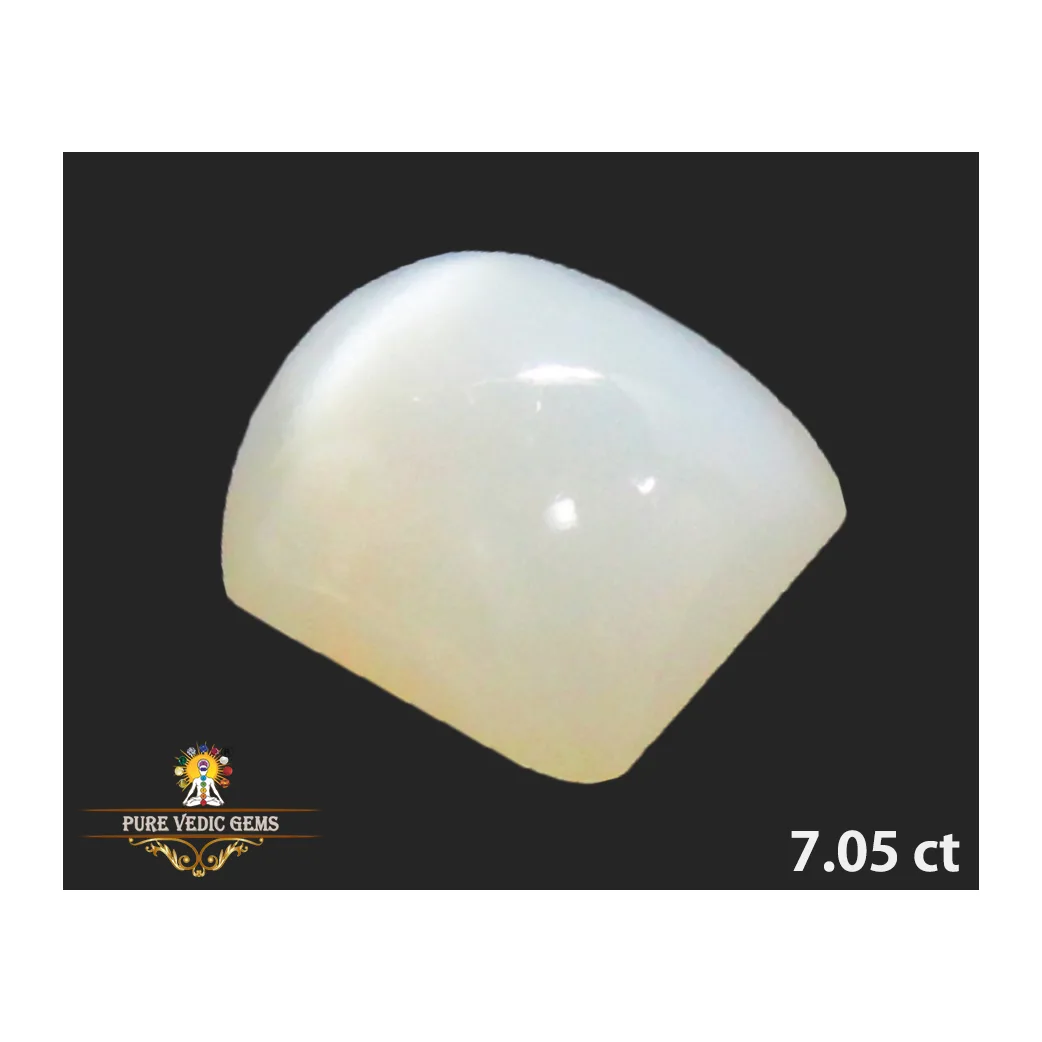
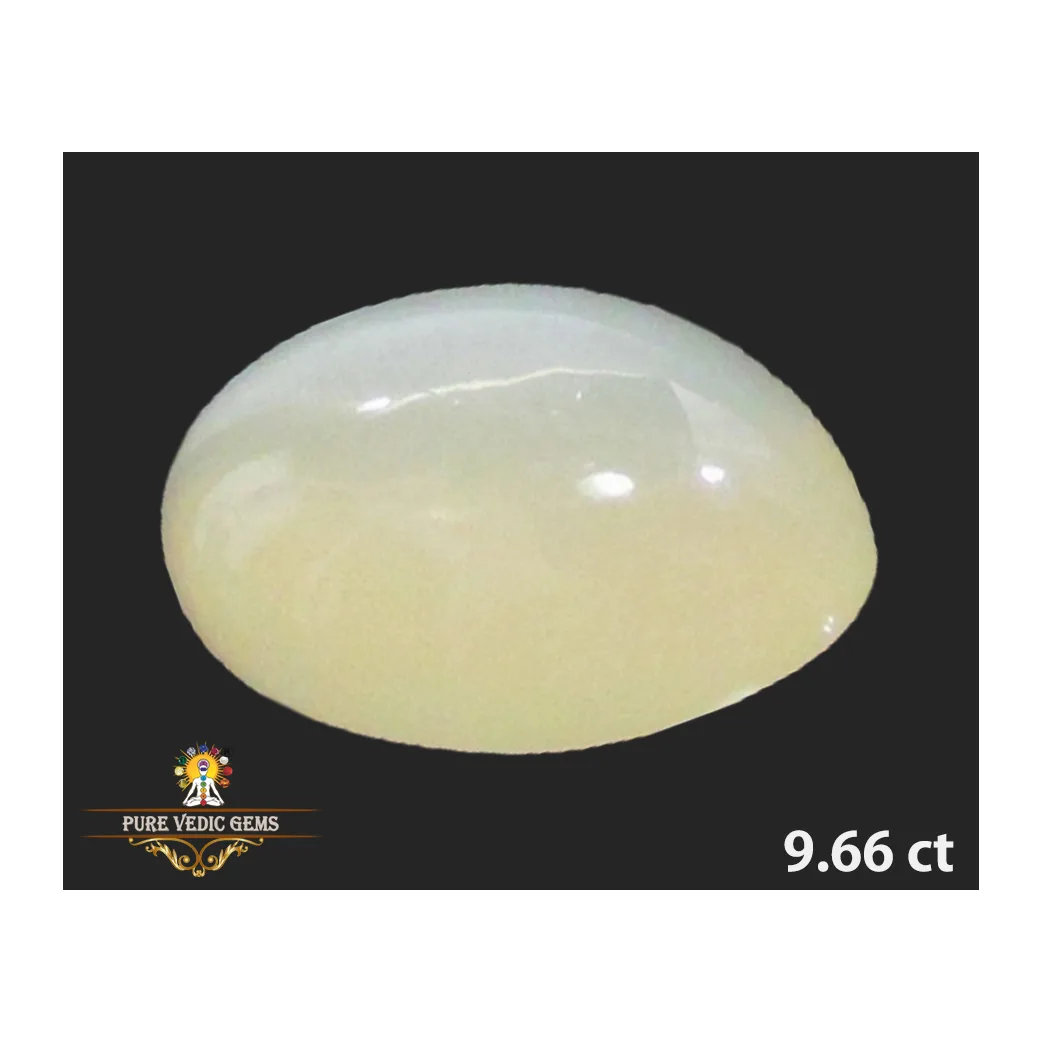
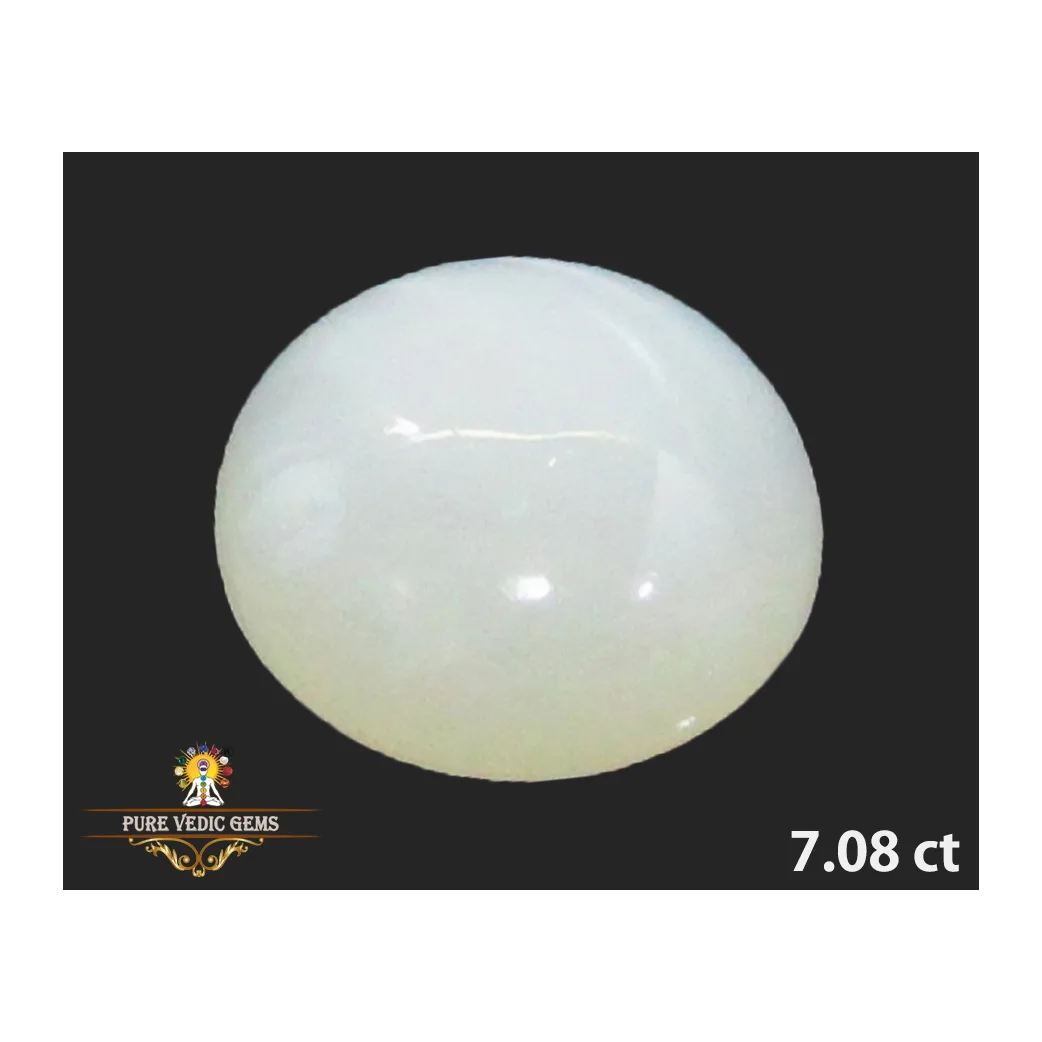
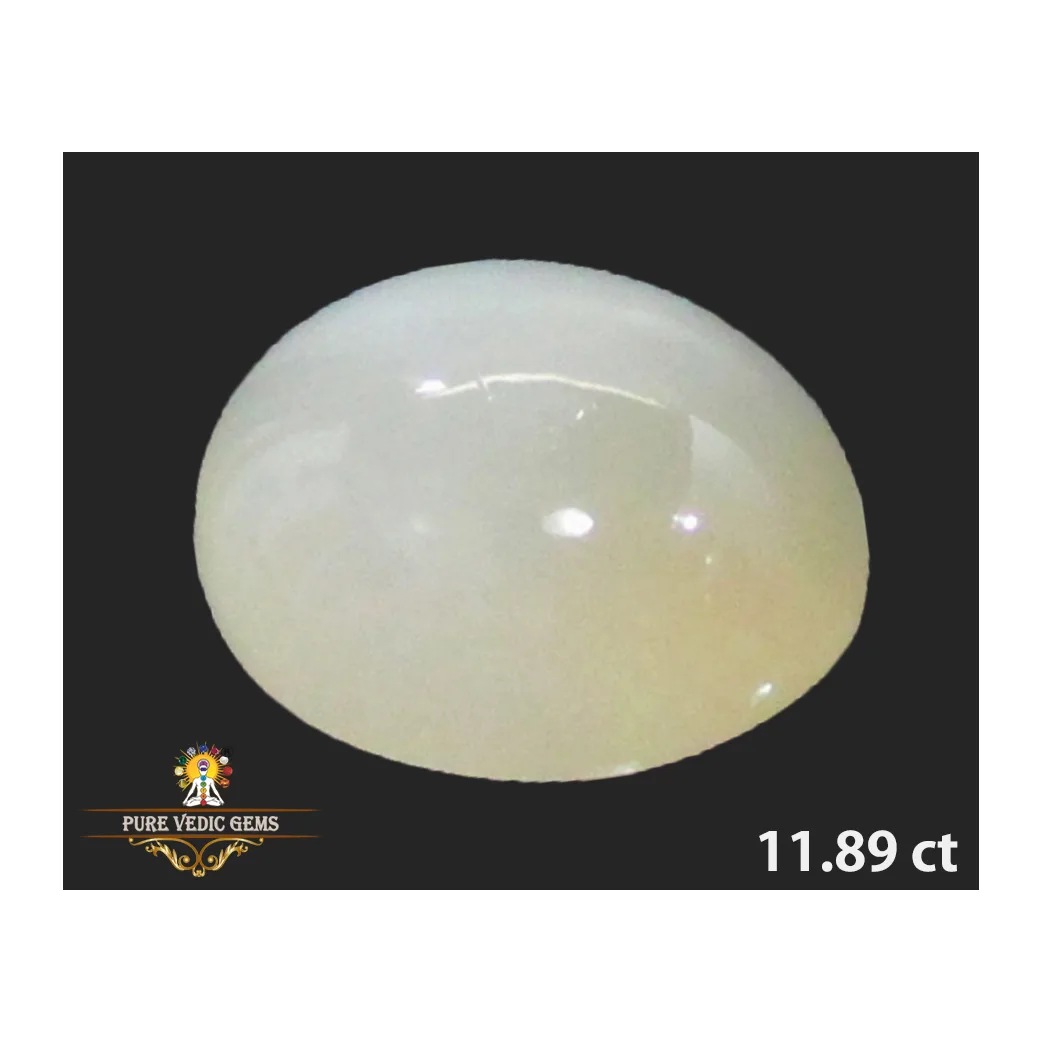
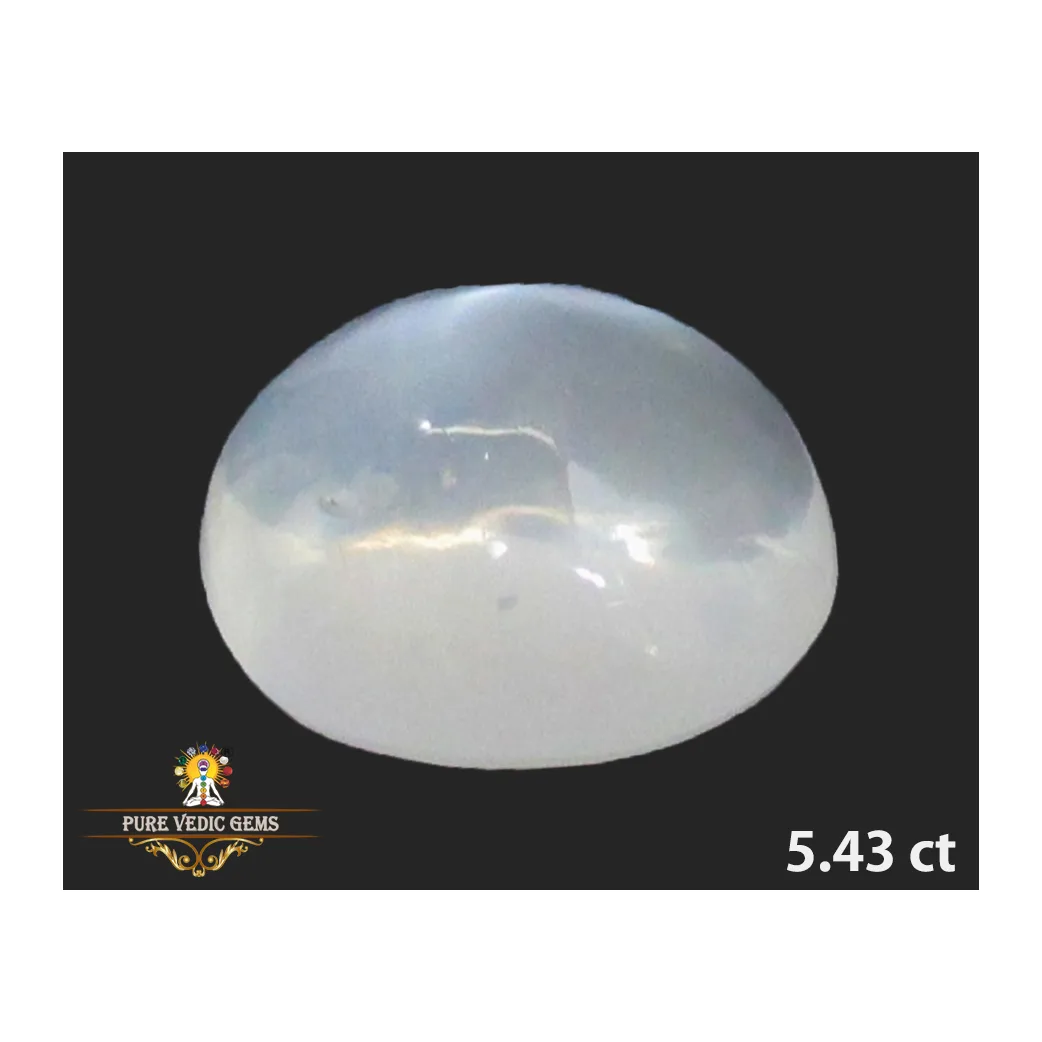
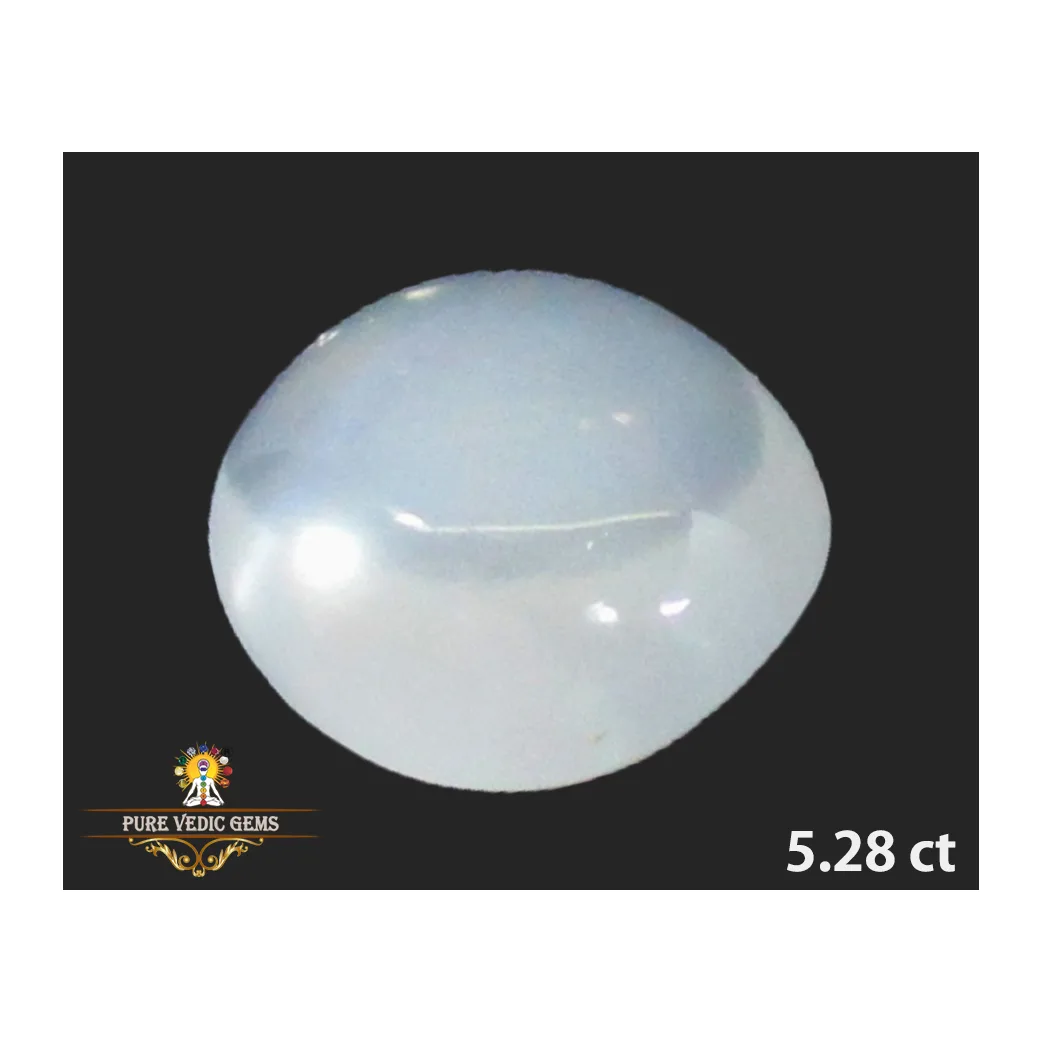
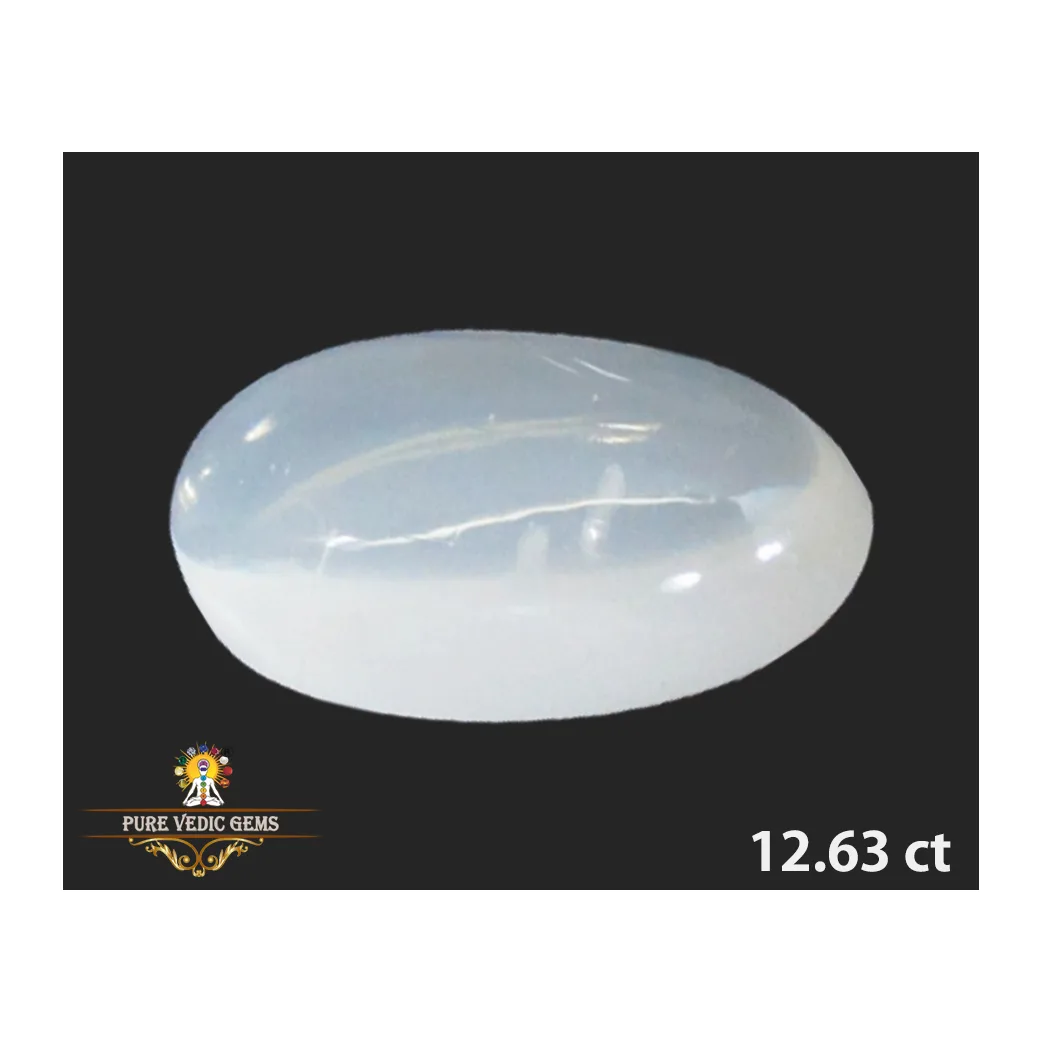
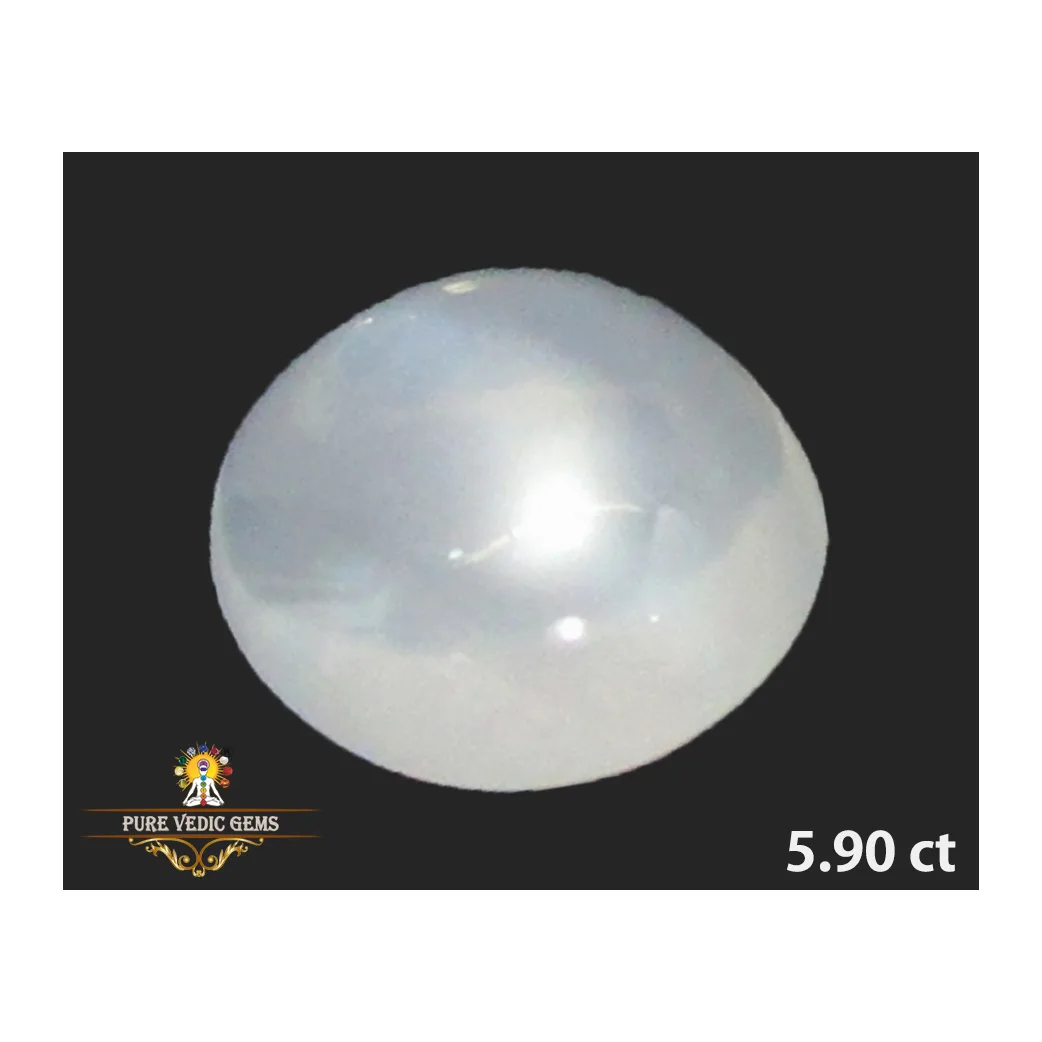
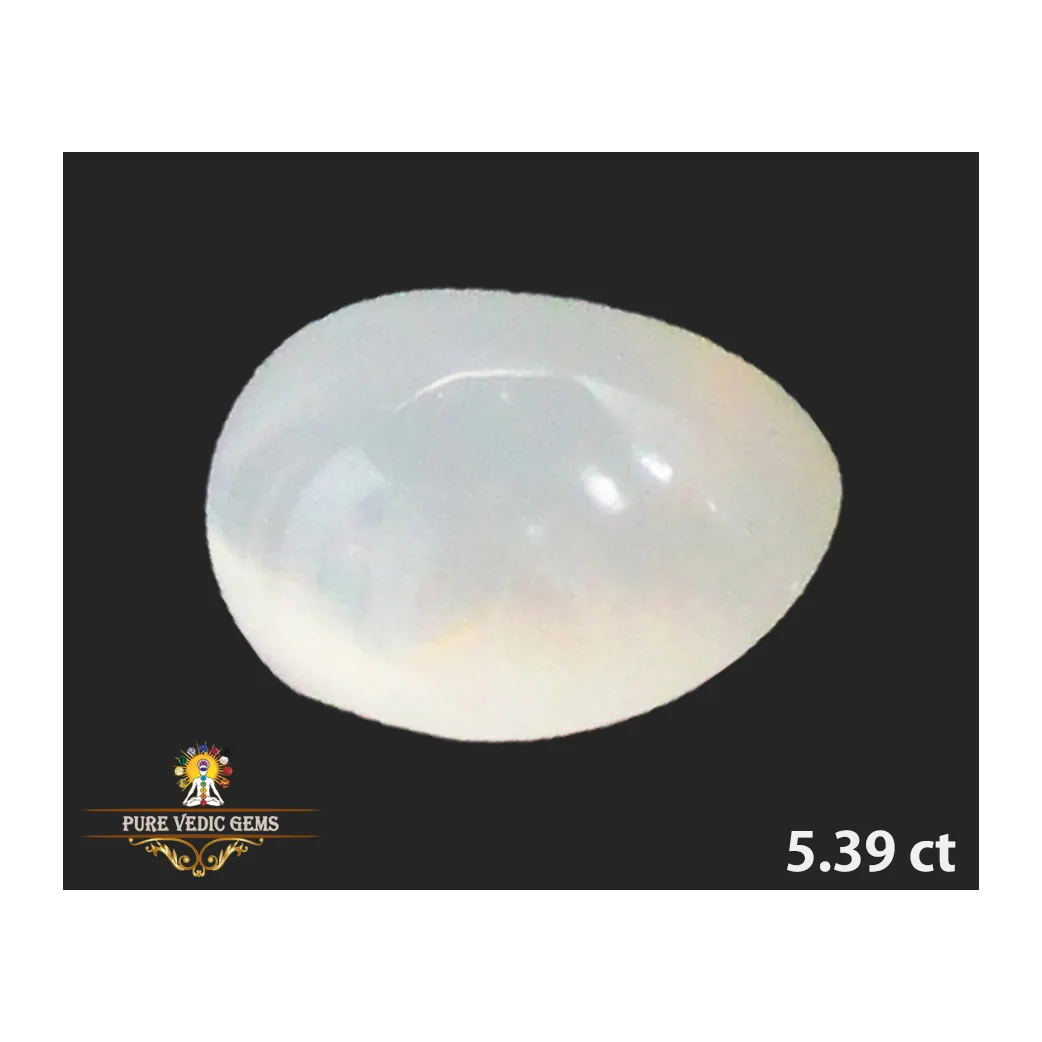
Moonstone — Chandrakant — displays a luminous adularescence reminiscent of moonlight, making it one of the most beloved Chandra upratnas wh…
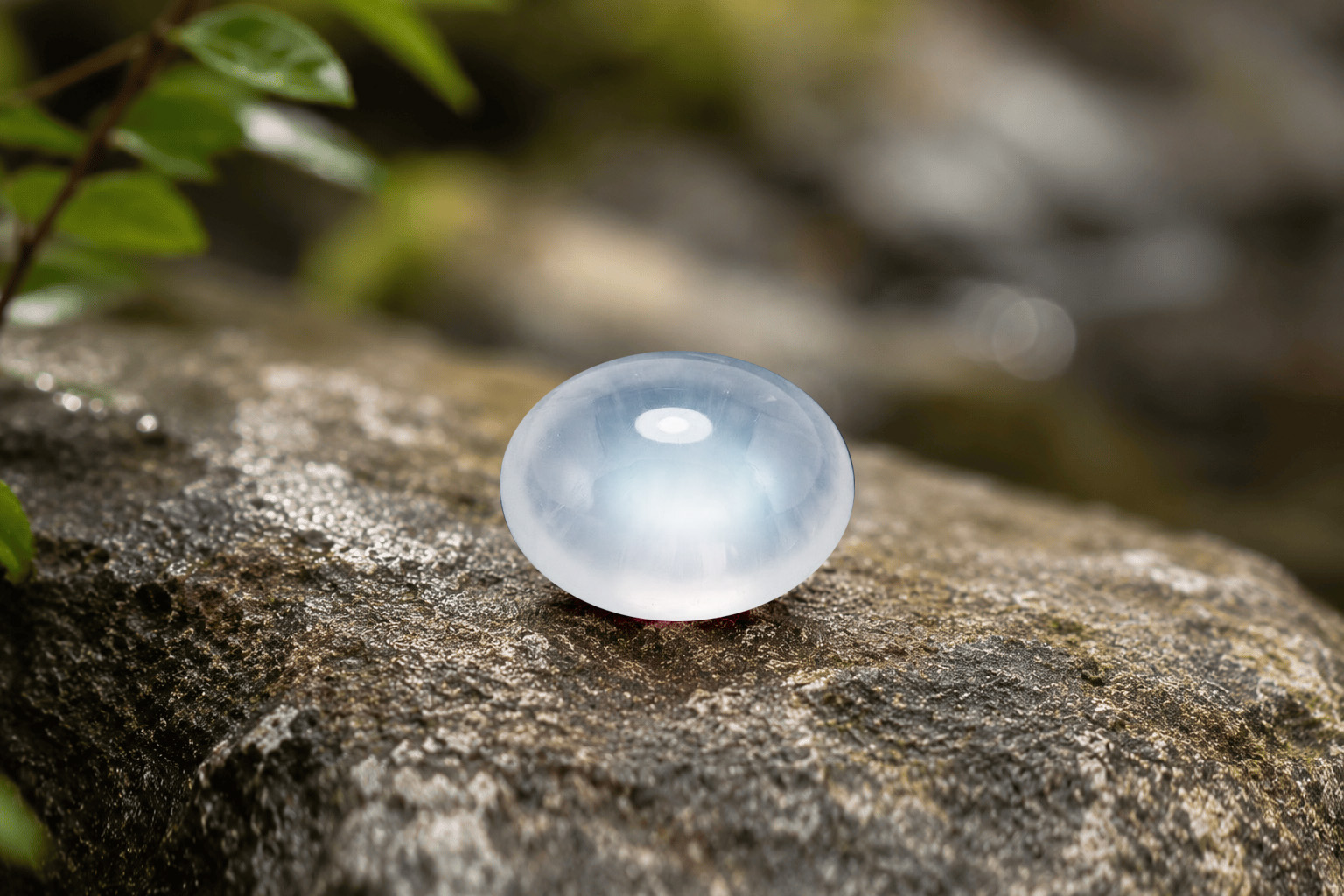
Moonstone is orthoclase or albite feldspar exhibiting adularescence — a floating blue-white sheen caused by light scattering between thin lamellae. Composition is potassium aluminium silicate with a Mohs hardness of 6–6.5.
In Jyotish, Moonstone is widely used as an upratna for Moti when the chart calls for Chandra strengthening. It is especially popular for emotional stability and mother-related karma. Gemstone remedies are chart-specific. Always consult a qualified Jyotish astrologer before wearing any stone for planetary purposes.
Sri Lankan (Ceylon) Moonstone set the global standard for blue sheen, while Indian and Madagascan sources offer varied body colours from colourless to peach.
| Mineral family | Feldspar (orthoclase/albite) |
| Key phenomenon | Adularescence (schiller) |
| Mohs hardness | 6–6.5 |
| Vedic association | Moon (Chandra) — upratna for Moti |
Wear on Monday morning during Chandra Hora, typically on the little finger of the right hand in silver. Purify with raw milk or Ganga jal and chant "Om Som Somaya Namah" 108 times.
Choose a cabochon with strong centred adularescence — the sheen should move across the dome when rotated. Open-back settings enhance skin contact.
Do not combine with a primary Pearl without astrological clearance, as doubling Chandra remedies may disturb emotional equilibrium in sensitive charts.
Prescribed when the Moon is weak, afflicted by Rahu/Ketu, or when Pearl is contraindicated (certain allergies or lifestyle constraints). Often considered for anxiety, mood fluctuation, and mother-child relationship karma.
May benefit creatives, healers, and those in caring professions when Chandra is a functional benefic. Avoid self-prescription during severe Chandra afflictions without expert analysis.
Gemstone remedies are chart-specific. Always consult a qualified Jyotish astrologer before wearing any stone for planetary purposes.
Traditionally supports emotional intelligence, intuition, and peaceful sleep rhythms under Chandra's governance. Many meditators keep Moonstone for its gentle, receptive energy.
Unlike organic Pearl, Moonstone is mineral and avoids marine sourcing concerns — appealing to ethically minded buyers.
Fine blue-sheen Moonstone also enjoys strong demand in artisan jewellery beyond astrology.
Rainbow Moonstone (white labradorite) is related but mineralogically distinct — clarify species with your seller. Classic Chandra upratna refers to orthoclase Moonstone.
Peach and grey body colours are common; blue-sheen Ceylon stones are premium. Cat's-eye Moonstone is a rare collectible variant.
Glass imitations with foil backs exist — certification is essential for significant purchases.
Blue adularescence intensity, dome symmetry, and transparency drive price. Fine Ceylon cabochons above 10 ct can be surprisingly costly for an upratna.
Minor inclusions are acceptable if the sheen remains vivid face-up. Compare sheen, not just body colour, when shopping online.
| Adularescence | Bright, centred blue sheen is top grade |
| Body clarity | Transparent to translucent with minimal black specks |
| Cut | High-domed cabochon maximizes schiller |
| Origin | Sri Lanka historically benchmark; India and Madagascar widely available |
Moonstone suits silver rings, delicate pendants, and Chandrama-themed bracelets. Protective bezels help because feldspar cleaves easily.
Earrings showcase adularescence beautifully for non-astrological fashion wear alongside remedial pieces.
Avoid ultrasonic cleaning and hard knocks — Moonstone cleaves along feldspar planes. Clean with lukewarm soapy water and a soft cloth.
Remove before sports and chemical exposure. Store wrapped separately from harder gems.
Opalite (glass) is often mis-sold as Moonstone. Rainbow Moonstone confusion with labradorite can mislead buyers seeking orthoclase Chandrakant.
Heat-treated or coated stones should be disclosed and are generally avoided for Jyotish.
Jyotish treats it as a recognized upratna, though primary Moti is considered stronger. Suitability depends on chart strength and dasha — consult your astrologer.
Blue-sheen Ceylon Moonstone is traditionally preferred for Chandra remedies, but your astrologer may specify body colour based on nakshatra or lagna.
Yes — Chandra remedies are gender-neutral. Metal, finger, and weight follow chart analysis, not gender alone.
Pearl is organic (mollusk secretion) ruled by Chandra as a Navaratna. Moonstone is a feldspar mineral used as a mineralogical upratna when Moti is not ideal.
Often 5–10 ratti is suggested for adults, scaled to body weight and Chandra strength. Personalized recommendation is essential.
With Mohs 6–6.5 and perfect cleavage, it needs protected settings. Pendants and occasional-wear rings last longer than unprotected daily rings.